

Or: I Accidentally Became a Manager of 15
I have never built an iPhone app. I want that on the record, because what happens next sounds like a humblebrag, and it's really more of a humblequestion.
I needed an app for JUC3BOX, my little event rental business (shameless plug: if your next party needs a bounce house, a stage, or power in the middle of a park, you know where to find me). So I opened Codex, OpenAI's coding agent, described what I wanted, and went off to do other things. Emails. Errands. Whatever else was on fire that day.
A couple of hours later, there was a working build of my first JUC3BOX app on my phone.
My phone. An app. That I "made." While I was doing something else.
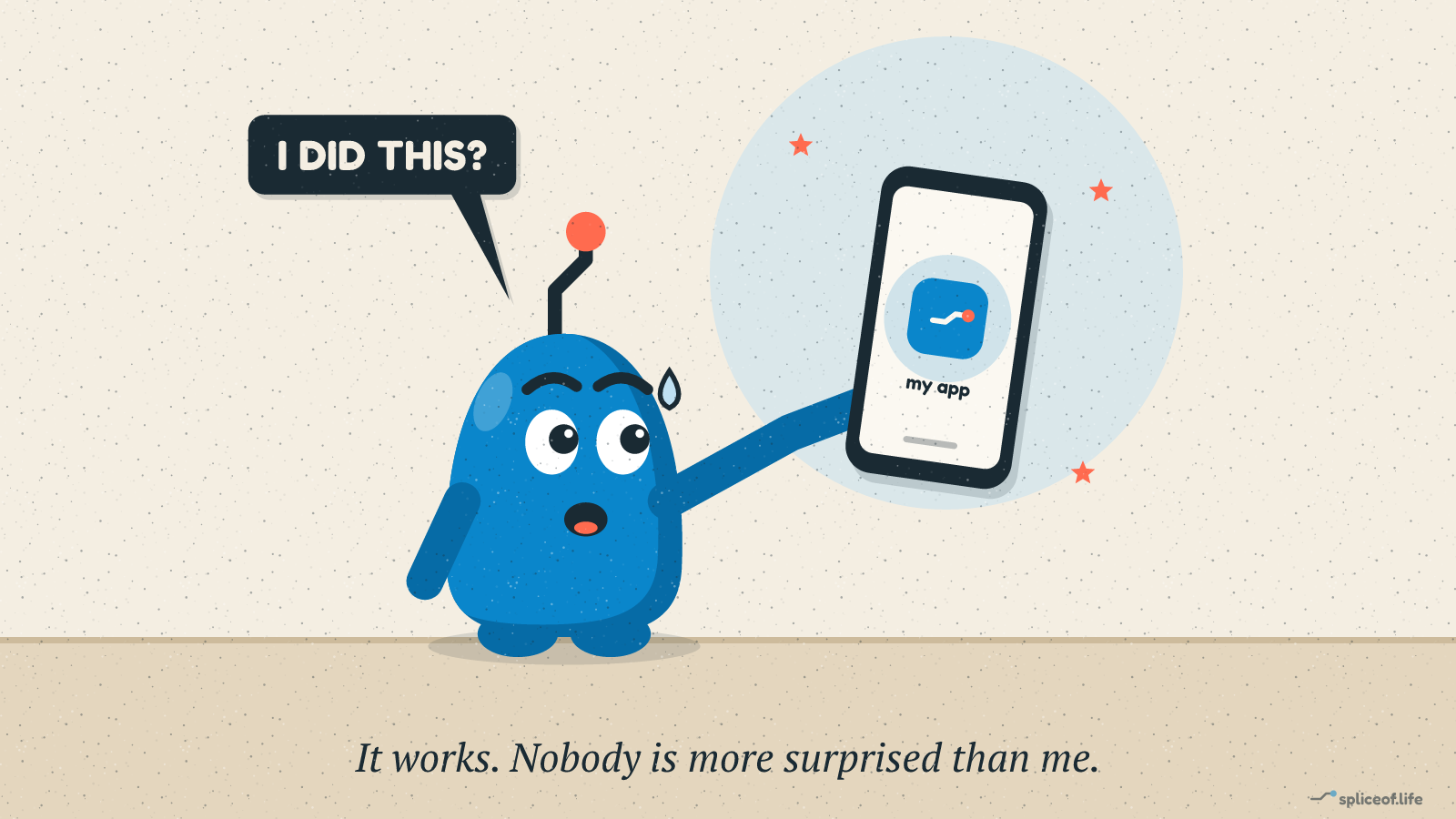
I stood there looking at it, and my brain went, wait. If the coding happened without me, what exactly did I just do?
Let's back up.
Part 1: If the Work Happened Without Me, What Was My Job?
For most of history, if you wanted an app, you either learned to code (years) or paid someone who had (money). Either way, a human typed every line.
That afternoon I typed zero lines of code. But I didn't do nothing, either. Looking back, what I did was:
- Decide what the app was for.
- Describe it clearly enough that something else could build it.
- Check what came back and say "no, not like that" a few times.
- Decide when it was good enough.
Read that list again. It isn't a programmer's job description.
It's a manager's.
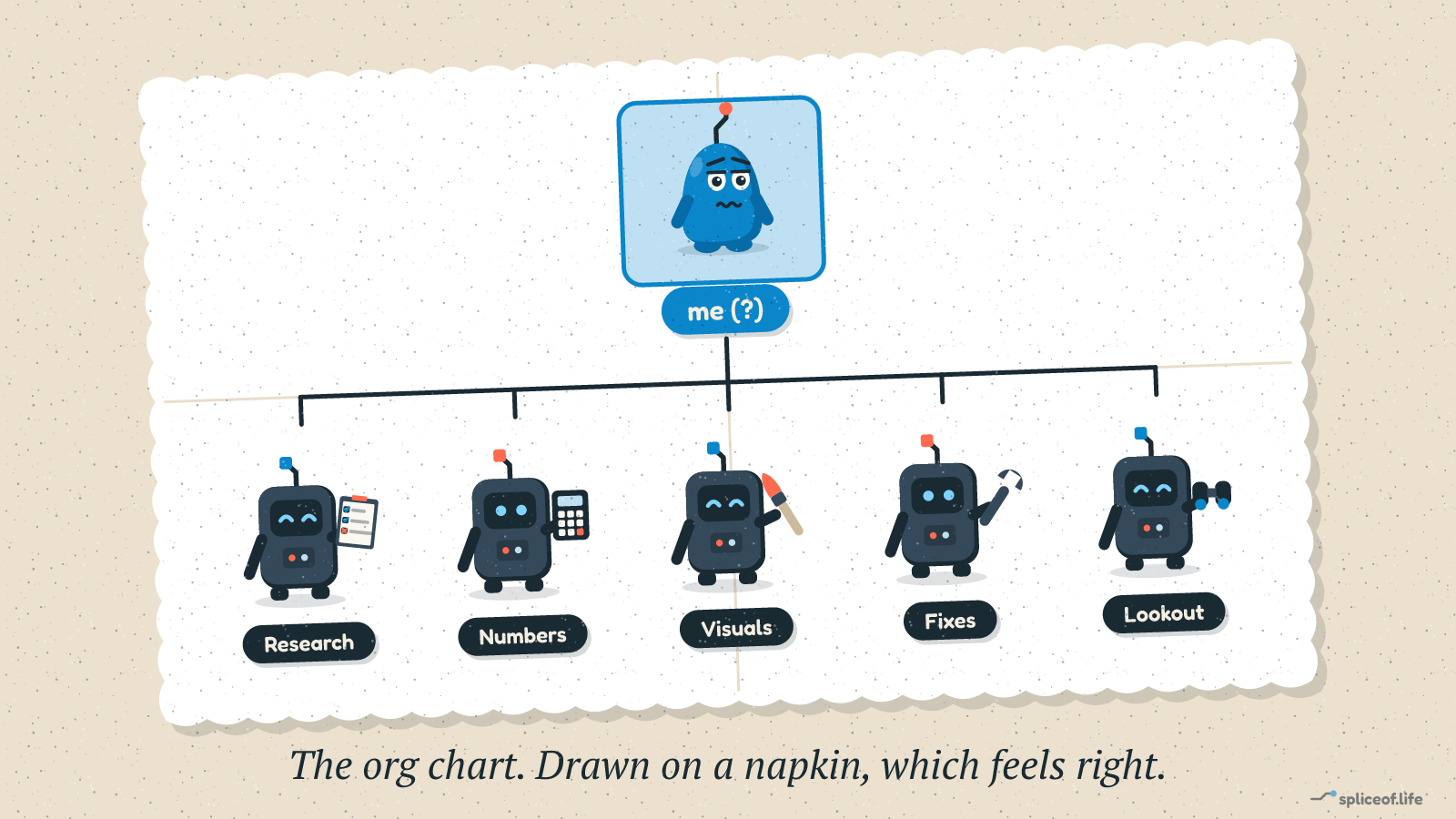
Which is funny, because I never applied for the position. Nobody gave me a lanyard. And yet here I am, a few months later, running a team of about fifteen AI agents. I'm doing management, which (please don't tell my agents) I've never been formally trained to do.
Part 2: From One Helper to a Department
It started the way it starts for most people: one chatbot, one conversation, lots of questions.
Then the tools grew arms.
Today I use a crew of Grok Bots, each with its own name and its own job, plus ChatGPT tools on the side. There's a Chief of Staff who keeps track of my life, and Studio for writing and creative projects. A few are dedicated to JUC3BOX: Juce runs the business side, Woz builds the website and app, Ledger keeps the books, Scout hunts for used equipment deals, and Visuals makes images. There are more, but you get the idea. If this were a sitcom, the cold open would be me in a hallway saying "Okay, team," to nobody.
Before the stories, a quick tour of the vocabulary, because the AI world names things the way toddlers name pets.
Part 3: A Field Guide to Your New Coworkers
The chatbot (or assistant) is a brilliant reference librarian behind a desk. Ask a question, get a great answer. But the librarian never leaves the desk. If you want the book returned, you're walking it back yourself.
An agent is the librarian with car keys. You give it a goal, and it goes out into the world to work on it, in steps, while you do something else. Both xAI's Grok Bot and OpenAI's new "dots" describe their agents as having their own always-on computer in the cloud.¹ It's less like asking a question and more like handing off an errand.
Plugins, apps, and connectors are the keys on the agent's key ring. One opens your email, one opens your calendar, one opens your spreadsheets. No key, no entry. OpenAI says dots can connect to over 4,000 apps,² which is a very heavy key ring.
MCP (Model Context Protocol) is the reason those keys all fit. Think of it as USB-C for AI: one standard plug so any agent can connect to any tool without a custom adapter for every pairing. It started at Anthropic, and in December 2025 it moved to a neutral home under the Linux Foundation.³ Boring? Extremely. Important? The plumbing always is, right up until it isn't there.
A2A (Agent2Agent) is the same idea, but for agents talking to each other. If MCP is the plug, A2A is the shared phone etiquette that lets bots from different companies call each other, introduce themselves, and hand off work. Its first stable version shipped in March 2026, complete with signed "agent cards" so a bot can prove who it is.⁴ Robot business cards. We live in the future.
"Sites" (web apps that agents build and publish) are the contractor who builds the house and pulls the permit. xAI's own example job for a Grok Bot is a website builder that builds the site, buys the domain, deploys it, and hands back a live URL.¹ My app story is the same idea pointed at a phone.
Skills are the recipe cards taped inside a cabinet door. Instead of re-explaining how you like something done, you write it down once, and the agent pulls out the card whenever that kind of job comes up.
Routines (scheduled automations) are the alarm clock that also makes the coffee. My Scout bot runs a deal sweep every weekday morning at 7:23 and only bugs me when something is worth a look.
Memory is the coworker who remembers you take your coffee black and hate meetings on Mondays. Not just what you said today, but what you've said before. This is the difference between a new temp every morning and a colleague.
Approvals and permissions are the permission slip (and, honestly, the reason I sleep at night). OpenAI's dots let you set rules that allow an action, require approval, or block it outright.² Grok Bot's example jobs leave every outgoing send for you to approve.¹ The robot can do the work, but it needs a signature before anything leaves the building.
Multi-agent handoffs are a relay race. One runner carries the baton to the next. The skill isn't in any one runner. It's in the handoff, where races are won and baton-related tragedies occur.
Okay. Now let's watch the team actually work.
Part 4: The Team, in Action
The clause that would have bitten hardest
I was shopping for business insurance and sent my Chief of Staff my personal auto policy to read. I hadn't called anyone yet.
A generic summary would have told me what the policy covers. My Chief of Staff already knew what JUC3BOX does: hauling rental gear, inflatables, and equipment to paid events. So it went looking for the part that mattered. It found it. My personal policy excluded using the vehicle to carry property for a fee, which is a polite way of describing my entire business model.
Its note: hauling gear to paid events could fall under that exclusion, "and that's exactly the moment you'd most likely have a claim."
That's not intelligence in the trivia sense. That's context. It knew my business, so it knew where to look.
Same day, same bot, it also caught its own mistake. It had queued up an email to go out from the wrong account, then flagged it before I sent anything: "Don't send that first card. It was set to go out from the wrong email account." I have worked with humans who would have let that one ride.
The mobile power relay
JUC3BOX offers mobile power: a power unit that runs off my Cybertruck's 240-volt outlet, so people can have electricity at a park or a backyard. I wanted it featured on the website and the app.
Here's how that went:
- I told Grok Bot (my generalist) what I wanted.
- Grok Bot handed it to Juce (business) to write the copy.
- Juce wrote a draft and then refused to make power claims, because nobody had confirmed the amp ratings yet. It also suggested holding off on taking bookings until the insurance question from the previous story was settled.
- Grok Bot came back with the exact equipment specs. I confirmed the adapter could handle full power.
- Juce updated the line to "up to 5 kW across 14 outlets."
- Only after I approved it would the copy go to Studio (website) and Woz (app).
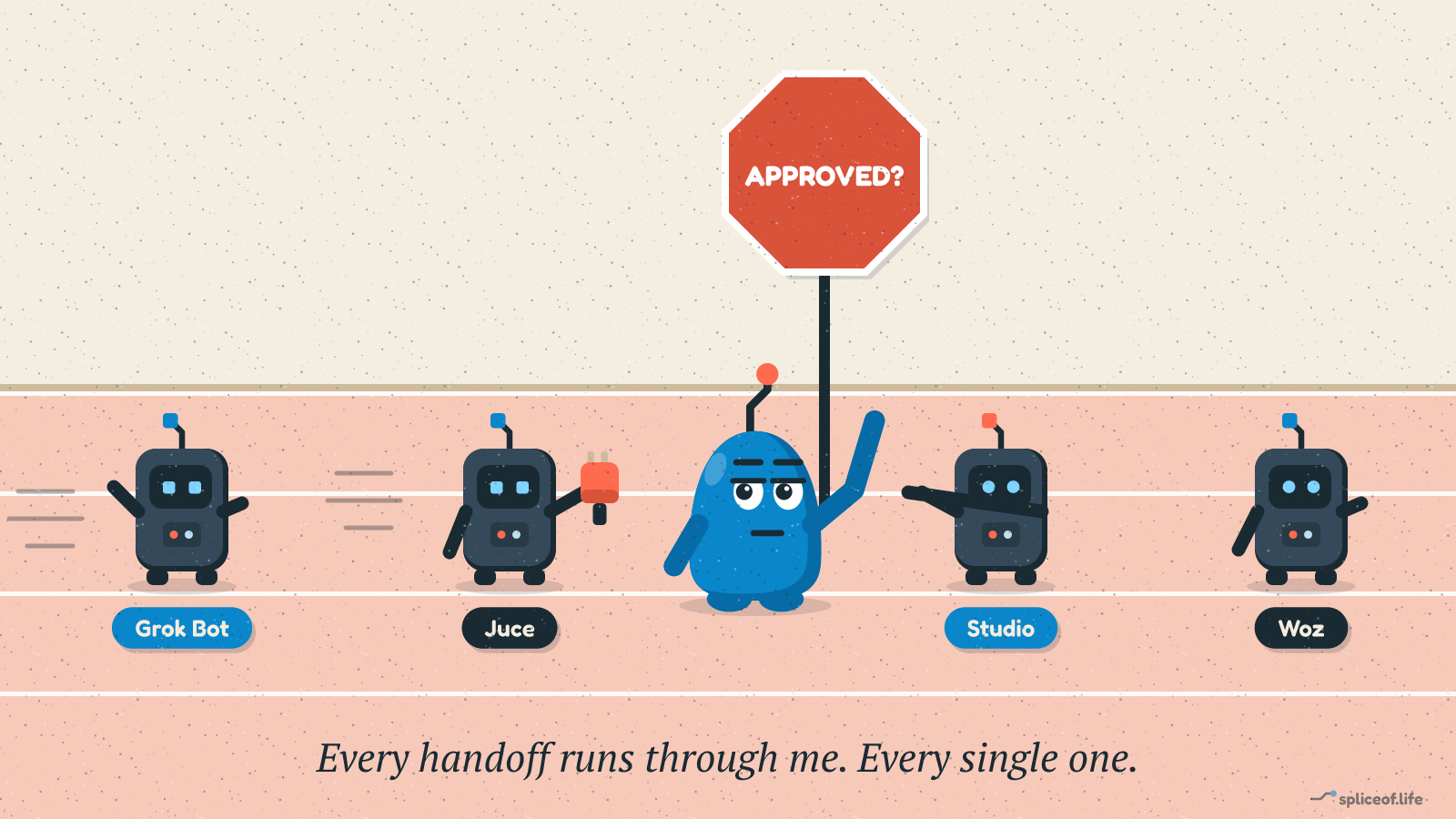
Notice what happened at step 3. The cautious move came from the bot whose job is the business. A writer's instinct is to make the copy exciting. A business owner's instinct is to not promise what you can't prove. Juce had the second instinct, which is the one I needed.
The fog machine reality check
I asked Woz to build lighting and fog rental packages. Before inventing a single package, Woz went through my order confirmation emails to see what I actually owned, so (in its words) "we're not offering 8 uplights if you only have 4."
The answer was humbling. Two fog machines, a jug of fog fluid, and one colored light. Fog, it said, was "the only thing you could rent out today."
So instead of a glamorous menu of gear I didn't have, Woz built one honest listing, "Party Fog & Light," starting at $65. It asked for my approval, then asked Visuals to make a photo for it. I approved that too, and the whole thing was live on the site and in the app shortly after.
A generic assistant would have happily written me a beautiful lighting menu. It would just have been fiction.
Two department heads walk into a pricing meeting
At one point I had Woz ask the team for placeholder prices on a few add-ons. Juce answered like a business strategist, checking what similar rentals cost around LA. Ledger answered like a bookkeeper, building the mileage rate up from what driving actually costs. Their numbers didn't match.
Good. That's why you have two advisors. And both of them independently said the same thing about mobile power: wait until the insurance is sorted out. When your marketing person and your accountant agree, listen.
Intermission: a cabaret tango about orbital mechanics
Not every task is serious. One afternoon I asked Studio to help me write a song about Lagrange points (the spots in space where gravity balances out and things can stay parked) as a metaphor for holding onto someone you love. Also, "Lagrange" sounds like a sexy French word, and I wanted to lean into that.
Studio came back with a 1930s Parisian cabaret tango in 5/4 time. When I said I wanted the French pronunciation, it spelled the name out phonetically, "Lah-GRONZH," so the music generator would sing it right. When I asked about a setting that didn't exist, it said, "That's my fault for assuming," and went and checked the actual tool.
Then it suggested the title "Station-Keeping," which is the term for the small thruster burns that keep a satellite in place. As a love song title, it means the small, constant effort it takes to stay close to someone.
I have a music degree. I was not emotionally prepared to be out-metaphored by my own software.
Part 5: Management Skills I Didn't Know I'd Need
Running this crew taught me the things management books have been saying for decades, which I had politely skimmed.
Handoffs are the job. The quality of what comes back depends heavily on the quality of what I hand off. "Make a lighting package" gets a fantasy. "Make a lighting package from what I actually own" gets something I can sell. Vague in, vague out.
Reviewing is work, not a formality. OpenAI's own announcement for dots says it plainly: they "can still make mistakes, so always review consequential work."² My bots catch their own errors sometimes (the wrong email account, a wrong auction link that Scout corrected in the next message). Sometimes is not always.
Some things don't get delegated. Signing up for insurance. Setting prices for real. Anything with my name on a promise. The bots can research, draft, and recommend. The commitment is mine.
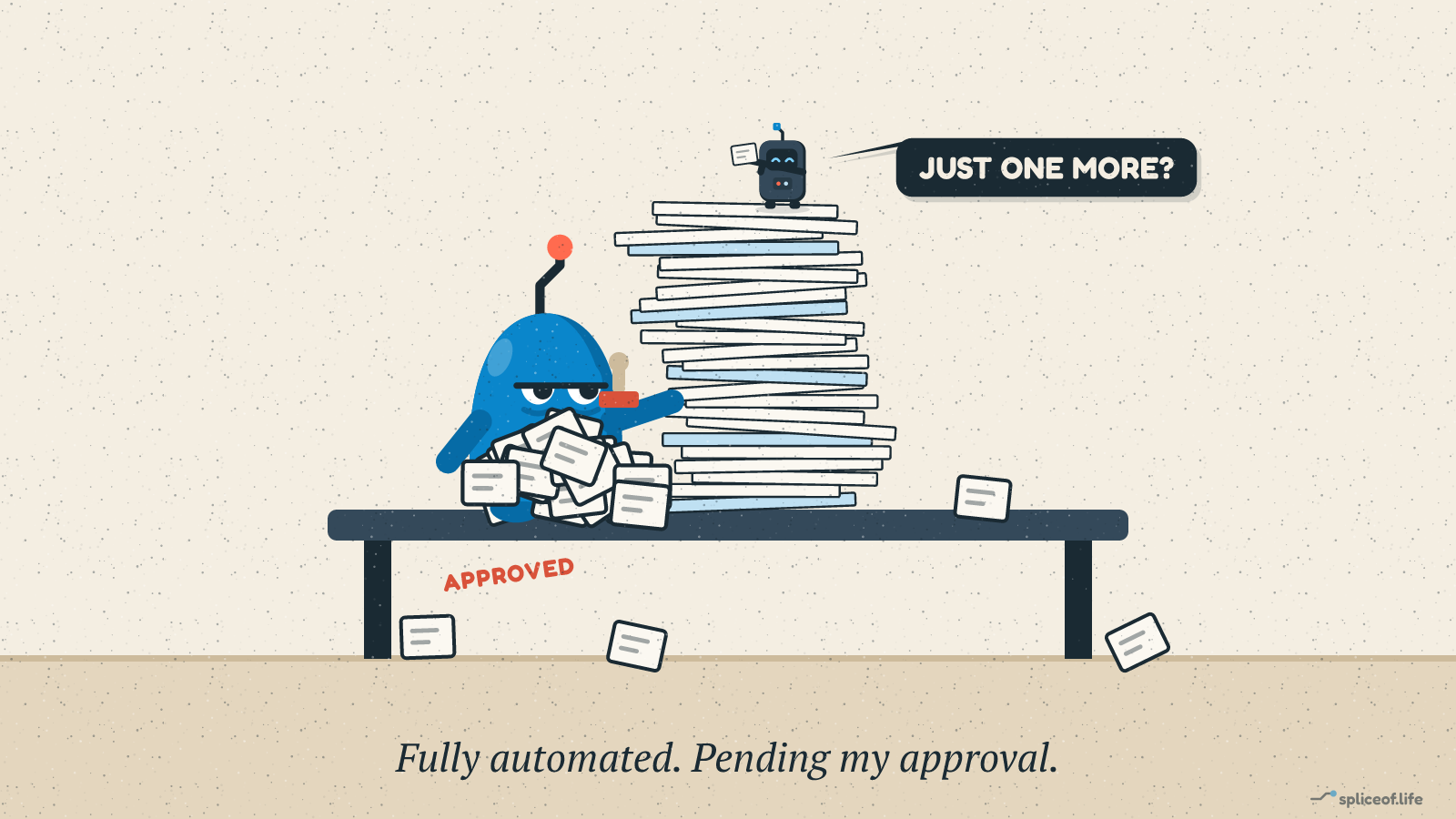
Approval gates are a feature, not a speed bump. Every story above has a moment where something stopped and waited for me. That's the point. Without that moment, I'm not a manager. I'm a bystander with a subscription.
There's a catch, though, and it's worth saying out loud. If I approve forty things a day without reading them, the gate is decoration. A permission slip only protects you if somebody actually reads it.
Part 6: The Steal-This Delegation Test
Before you hand anything to an agent (or a human, honestly), run it through four questions:
- Could I explain what "done" looks like in two sentences? If not, I'm not ready to delegate. I'm ready to think.
- Does this need context only I have? Then I give that context up front, or I pick the agent that already has it.
- What's the worst thing that happens if it's wrong? If the answer involves money, safety, or my reputation, there's an approval gate. No exceptions.
- Will I actually review it? If I won't, I shouldn't delegate it. I should either do it myself or decide it doesn't need doing.
Part 7: So, What Was My Job?
Back to that afternoon, staring at an app on my phone that I didn't write.
I used to think the valuable part of making something was the making. The typing, the building, the hours. And some of that is changing fast, whether we're ready or not.
But every story here has the same shape. The agents did the work. The parts that mattered, though, were knowing what JUC3BOX really is, what I actually own, what I'm willing to promise, and when to say "not yet." Those came from me. The robots brought speed. I brought judgment, and judgment turns out to be the job.
So no, I didn't build that app.
I managed it.
Turns out that's a real skill. Who knew? (Every middle manager ever, that's who. Sorry, everyone. I get it now.)
¹ xAI, "Grok Bot is now included with more plans" (Grok Bot launched in beta Aug 11, 2026). https://x.ai/news/grok-bot-more-plans
² OpenAI, "Introducing dots" (Sep 29, 2026). https://openai.com/index/introducing-dots
³ Model Context Protocol Blog, "MCP joins the Agentic AI Foundation" (Dec 9, 2025). https://blog.modelcontextprotocol.io/posts/2025-12-09-mcp-joins-agentic-ai-foundation/
⁴ Agentic AI Foundation, "A2A joins AAIF's open agentic stack." https://aaif.io/blog/a2a-joins-aaif
