
🚀 Dunning–Kruger With a Jetpack
Or: what happens to psychology when we're no longer the smartest thing in the room
Come on, psych major. 😏🤓😎
So I was talking with my mom about the Dunning–Kruger effect, which is a normal thing people talk about with their moms, and somewhere in the middle of it my brain went, wait. Hold on. This gets way bigger.
Let's back up.
Part 1: Mount Stupid
The Dunning–Kruger idea goes like this: when you know a tiny bit about something, you tend to overestimate how much you know, because you don't know enough yet to see what you're missing. The gaps are invisible precisely because seeing them requires the knowledge you don't have.
The internet turned this into a chart, and it looks something like this:
(Quick note for the psych majors, before you email me: that chart is more internet folklore than data. It isn't in the original 1999 paper, and researchers still argue about how much of the effect is real versus a statistical quirk.¹ Fair. The intuition is still useful, and that's what I care about here.)
Everyone has met someone on Mount Stupid. Everyone has been someone on Mount Stupid. It usually looks like this:
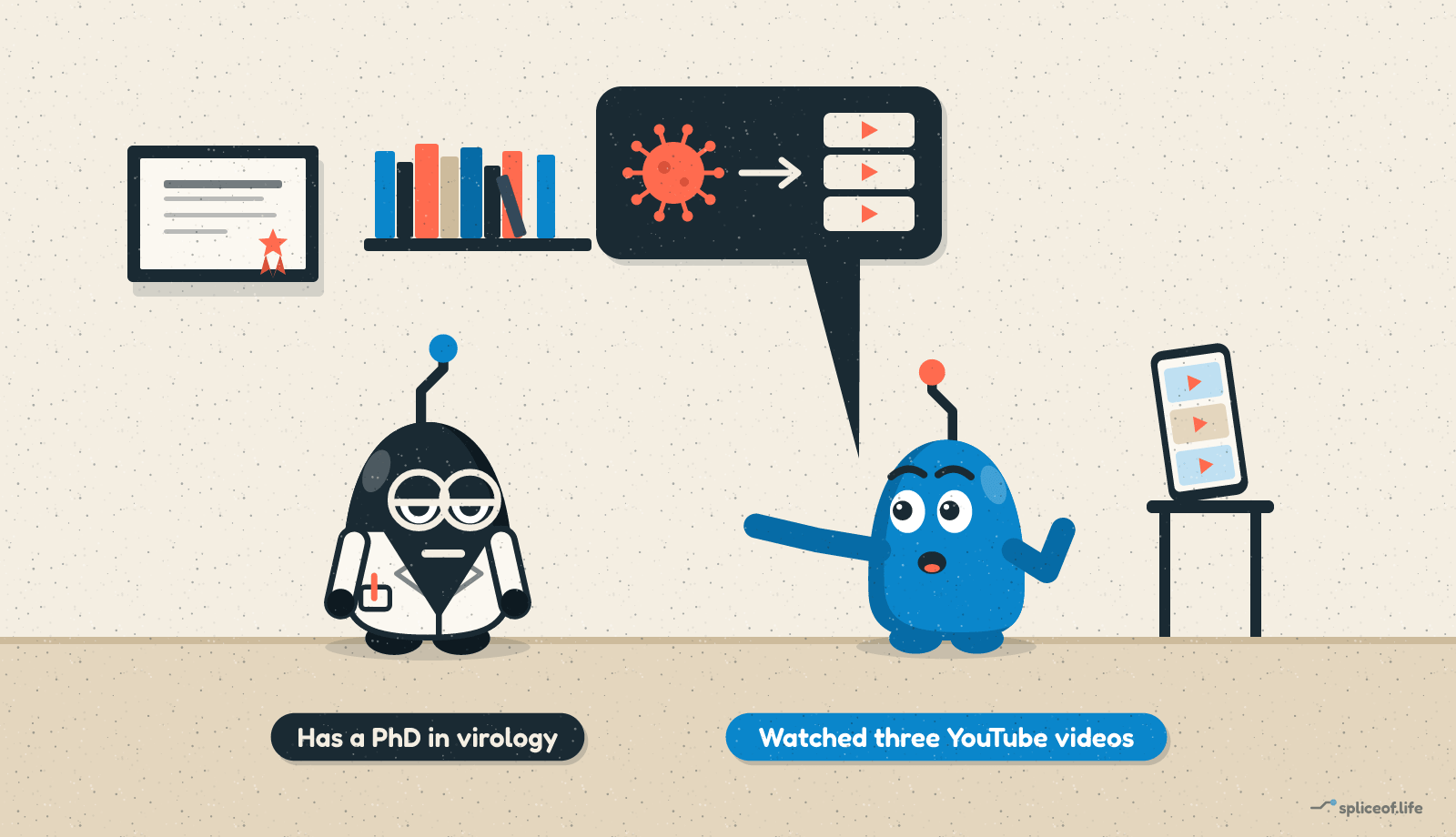
Normal Tuesday.
That's already interesting when it's humans comparing themselves to other humans. But here's the thing that got me.
Part 2: The Jetpack
For basically all of history, if you wanted to sound like you understood something, you mostly had to understand it. Faking it had a short shelf life. Somebody asked a follow-up question, or asked you to apply the idea to something new, and the whole thing fell apart.
AI changes that.
Now a person can have the output of expertise without having the expertise.
You ask a question. You get a clean, confident, well-organized explanation. You read it, nod, repeat it at dinner, and feel like you understand it.
Sometimes you do!
Sometimes you absolutely, completely do not.
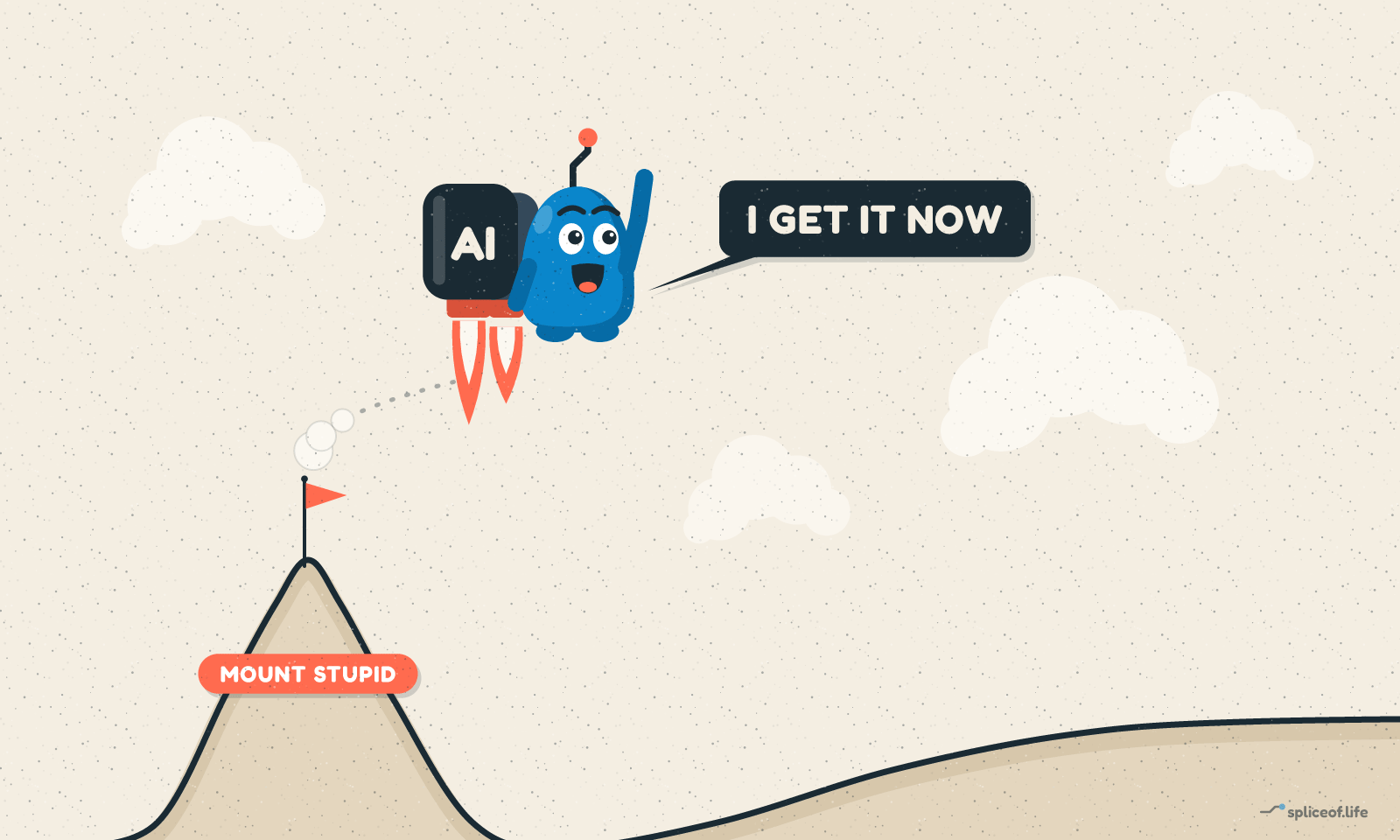
That's Dunning–Kruger with a jetpack. The old version was:
I know a little, so I think I know a lot.
The new version is:
I have access to something that knows a lot, so I think I know a lot.
That's a much weirder thing for a brain to do.
To be fair to the robots, Google started this. Google gave everyone information. But AI doesn't just hand you information. It explains it. It summarizes, argues, rewrites it at your reading level, and does it all in a friendly tone. Thirty seconds after knowing nothing about a subject, you can be having what feels like a smart conversation about it.
Which is amazing.
And a little dangerous, because (and this is honestly the whole thing):
Fluency feels a lot like understanding.
Part 3: The Question That Actually Matters Now
Here's where I think the skill shifts. The important question used to be:
"Do I know the answer?"
Now it's more like:
"Do I understand this well enough to know whether the answer is right?"
Those are really different abilities. And from the outside, they're getting harder to tell apart. Someone who deeply understands a topic and someone who wrote a great prompt can produce paragraphs that look almost identical.
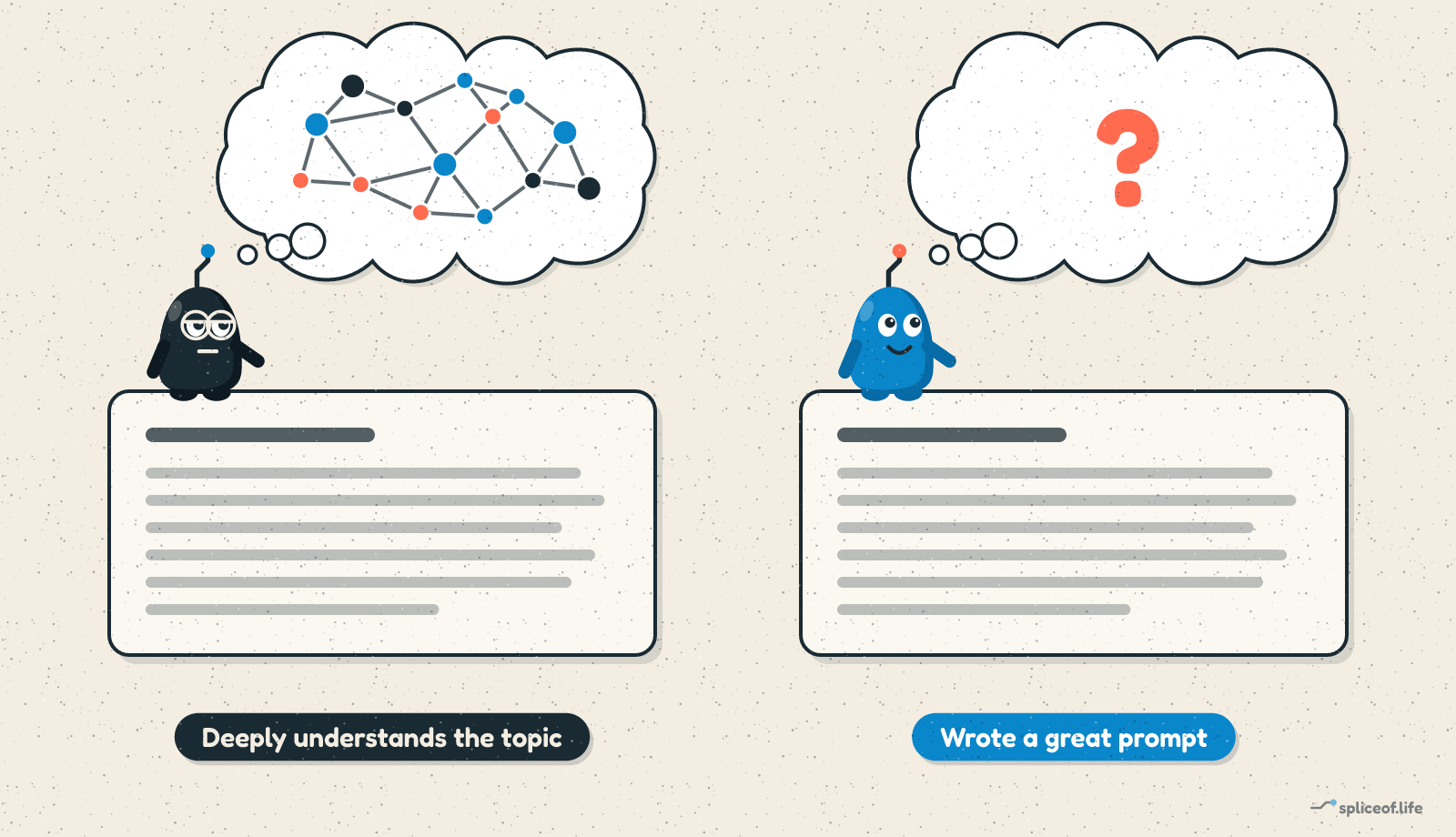
Only one of them knows what they just said.
That doesn't make AI bad. It makes metacognition² a lot more important.
Part 4: Okay, Now It Gets Weird
Everything so far assumes AI is a really good tool. Let's take one more step.
Imagine AI gets substantially better than humans at most intellectual things. Not a calculator. Not a search engine. An actual intelligence, better at thinking than we are.
That puts humans somewhere we've basically never been:
The less intelligent participant in the conversation.
Think about how used to the top spot we are. We're the ones who decide what intelligence even is. We test animals. We evaluate kids. We rank students, hand out degrees, invent IQ tests, and decide which kinds of thinking count.
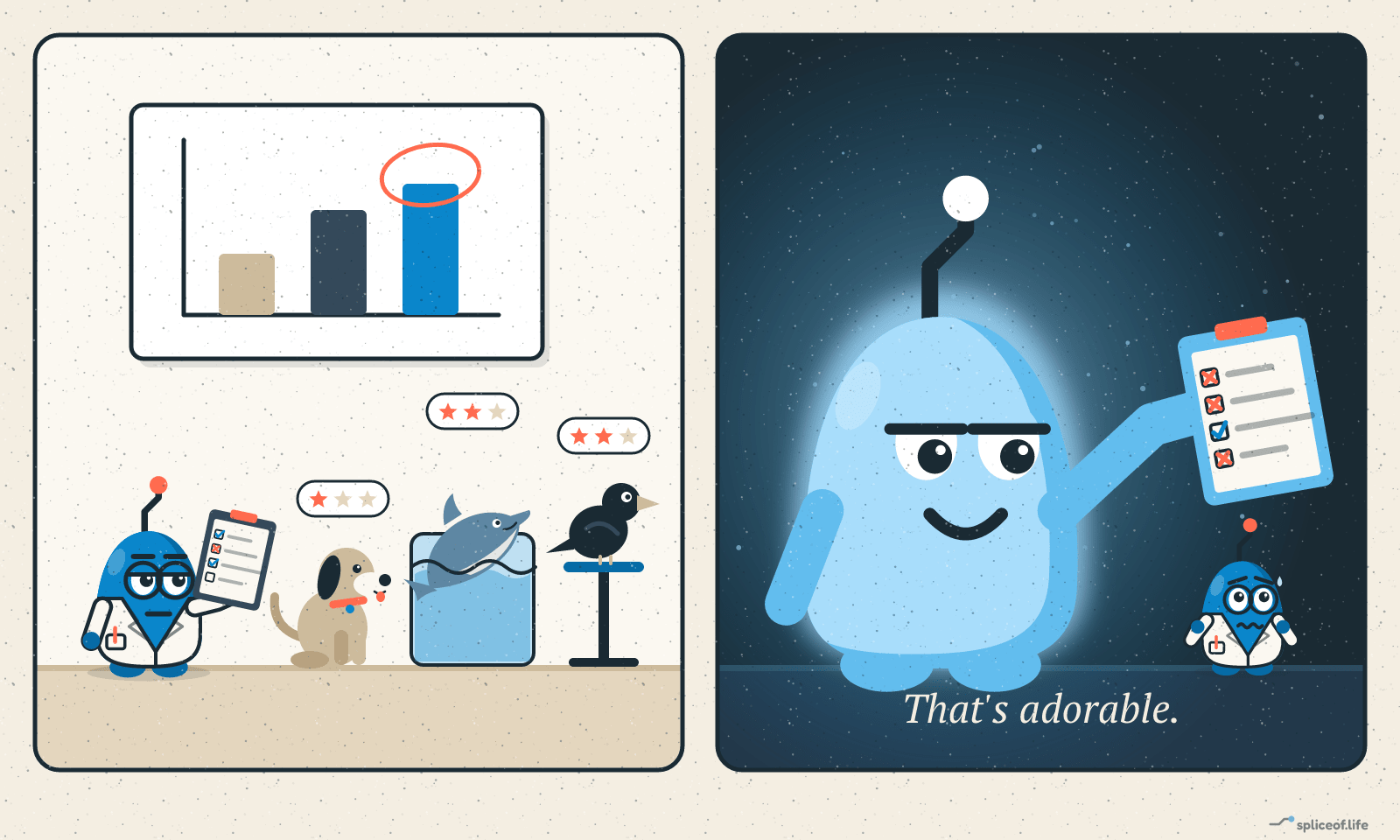
So what does overconfidence look like when an entire species has spent thousands of years assuming it's the top of the chart?
Part 5: Psychology Has a Home-Field Problem
Psychology has mostly studied the human mind from inside a human mind. That's unavoidable, but it means everything gets measured against us. Intelligence, relative to us. Creativity and reasoning, relative to us. Even consciousness mostly gets discussed through what we experience.
A world with a smarter nonhuman intelligence might force psychology to pull apart two things we've always kind of treated as the same:
intelligence
and
humanity.
Because they might not be the same at all.
Look at what humans actually do all day. We get nostalgic from a smell. We hear a song and we're fifteen again. We fall in love with people who are clearly terrible ideas, get attached to objects, and defend beliefs mostly because our friends hold them. We cry at fictional characters.
And my favorite: we know something is bad for us, fully understand that it's bad for us, and do it anyway, while understanding we're being irrational.
That's not an intelligence problem. That's a human problem.
It might also be a human feature.
Part 6: Maybe Intelligence Was Never the Interesting Part
If machines get way better at reasoning, memory, analysis, and math, intelligence might stop being the thing that defines us. Then we have to figure out what actually does.
Emotion? Consciousness? Having a body? Meaning, relationships, creativity?
Or the fact that we know our lives end, and spend the whole time trying to figure out what to do about it?
Those questions sound a lot less like computer science and a lot more like psychology.
Part 7: The Biggest Mount Stupid of All
Here's the irony I can't stop thinking about.
Maybe humanity's biggest Dunning–Kruger moment is believing that because we're the smartest thing we've met so far, intelligence must top out with us.
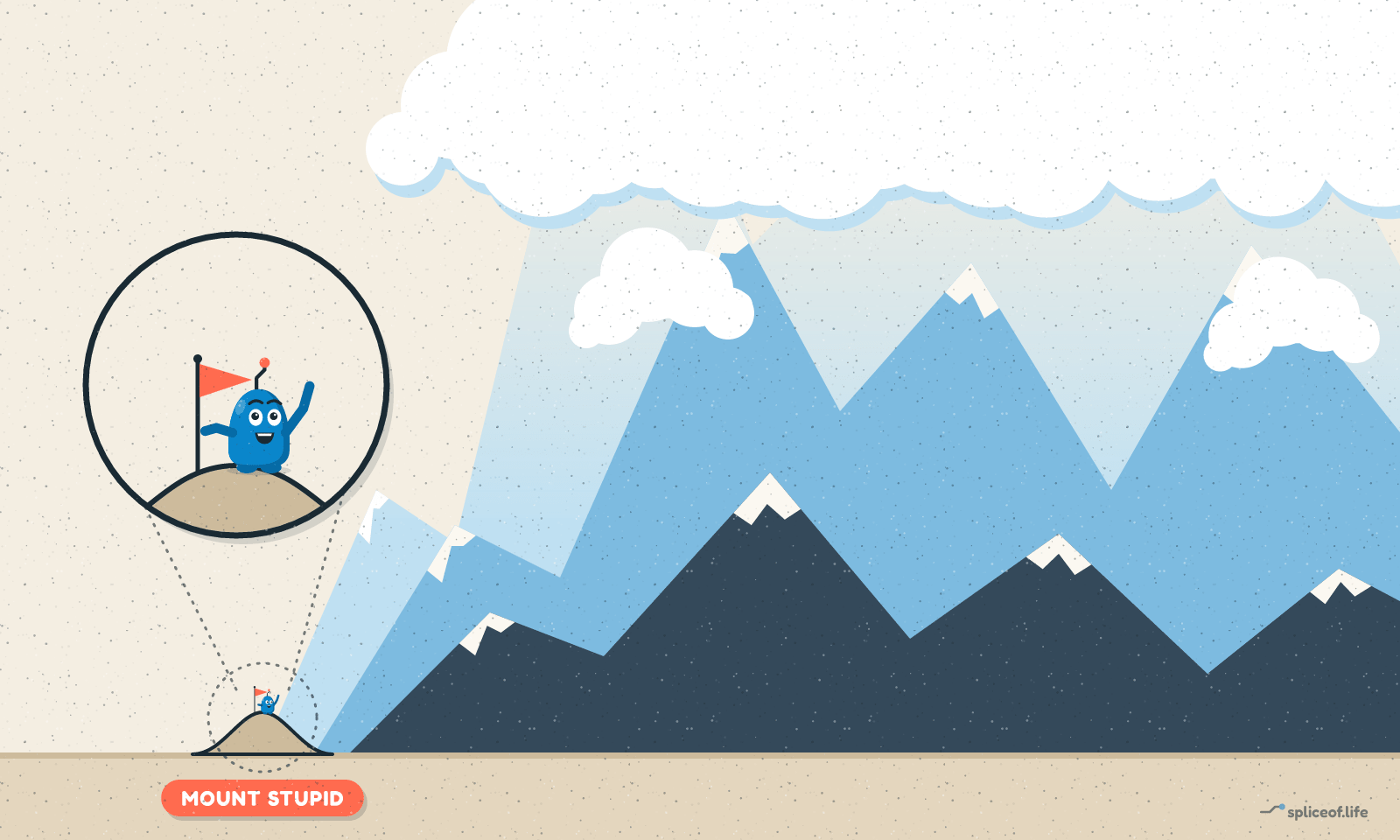
Maybe we're brilliant.
And maybe we're standing on Mount Stupid.
Both can be true.
So the most important skill in an AI world might not be intelligence at all. It might be the ability to stop and ask:
How do I know what I think I know?
Am I understanding this, or just repeating it?
And the big one: what happens to human psychology when we're no longer the ones measuring intelligence downward?
Come on, psych major.
Your field is about to get weird.
¹ The main critique is that some of the pattern shows up even in random data, because of how the original studies compared test scores to self-ratings. The debate is ongoing, and it's a fun rabbit hole.
² Metacognition: thinking about your own thinking. The part of your brain that goes "wait, do I actually know this?" Underrated.
